The argument in brief
- The question
- What changes when an AI can own a problem instead of answering a prompt?
- The claim
- Our use of computers is shifting from prompting an AI and doing the work ourselves to handing agents a goal and letting them own the problem, so we will work on outcomes rather than tasks. Confidence: A prediction, based on my early experience with one agent tool. No data are cited.
- The evidence
- My own use of one agent product, which let me message it, give it several requests at once and ask it to own a problem.
- My understanding that it works by stacking language-model agents. I have not verified how it works.
- No studies, benchmarks or other users' experience.
- The best counter
- Handing over the problem also hands over the checking. Chatbots keep a person in every step, which is slow but is also a safeguard.
- What would change my mind
- If checking what agents produce costs me about as much effort as doing the tasks myself, or if their mistakes tend to surface late.
- Open gaps
- 2 gaps. Statements I haven't verified yet. Each is marked in the text.
The question: What changes when an AI can own a problem instead of answering a prompt?Go back five years and ask yourself what you would feel is dramatically different about how you do your work. I bet you’d not really envisage much change in the tools you use and the way of working.
The chatbot arrives
But then on 30 November 2022, Sam Altman posted a tweet with the innocuous post:Source: The launch announcement, posted the day ChatGPT went public.today we launched ChatGPT, Sam Altman (@sama) on X, 30 November 2022
today we launched ChatGPT.
try talking with it here:
chat.openai.com
Suddenly the world was exposed to a magical new thing called a Large Language Model. Nobody really knew that GPT meant Generative Pre-trained Transformer, and nor did they care. “ChatGPT” was a phrase that came to everyone’s consciousness in everyday conversation.
Now the computer could talk like us. We could use it to write an email, complete assignments and look up facts about the world. As the chatbots got more commonplace, our comfort of writing a prompt and watching as the result streamed out became commonplace.
From responding to acting
Then they started to do more than respond. They can write code, think longer, research the web and use our computer.
Sounds amazing right? But that’s not the final form of how we interact with computers to get work done.
We’re now seeing a shift in how we treat our AI agents. Unverified: I didn’t really jump on the OpenClaw bandwagon for a multitude of reasons, but when Grok Bot was released to existing Cursor users,Gap · no source yet: I haven't linked sources for OpenClaw or for when and how Grok Bot reached Cursor users; this is from my own use and memory. Claim, confidence:a prediction, from my experience of one tool: I suddenly realised that computing was about to change forever.
Owning the problem
Currently the role you play is to ask AI to assist with your tasks. The response it gives is for you to do something with. It has no responsibility to continue working on your task unless you ask it to.
But with Grok Bot you switch from prompting your agents to messaging them. Suddenly you no longer have to wait for the response before you can continue. You can ask it multiple things at a time and it will handle these.
Limits: This is one person’s early experience of one product. I compared it with no other tool, ran no test and cite no studies, benchmarks or other users.But what has really taken me aback using it, is that Claim, confidence:my experience of one tool; I haven't checked it further: for the first time, I can ask my agent to own the problem.
An assumption: I am assuming that “keep working until it meets the solution” means a solution I would accept. I have not said how I check that, and the agent may judge for itself that it has finished.Unverified: Because it works by stacking LLM agents,Gap · no source yet: I haven't verified how this product works under the hood; stacking LLM agents is my understanding, not something I've seen documented. it can break down the problem-solution goals and keep working until it meets the solution.
Suddenly, this doesn’t look much different to how managers work with a team of people. You give it the goal and the process you desire and the agent can work on it diligently.
Who holds the problem at each step
Chatbot: you prompt, it answers
- You: Write a prompt (holds the problem)The AI:
- You: Waiting for the answer (holds the problem)The AI: Writes an answer
- You: Do something with the answer (holds the problem)The AI: Stops until asked
- You: Prompt again (holds the problem)The AI:
- You: Waiting for the answer (holds the problem)The AI: Writes another answer
- You: Do something with that one too (holds the problem)The AI: Stops until asked
You hold the problem at every step. The answer is yours to act on, and nothing happens until you prompt again.
Agent: you state the goal, it owns the problem
- You: State the goal (holds the problem)The AI:
- You: Free to ask it other thingsThe AI: Plans the steps (holds the problem)
- You: Not waitingThe AI: Acts on the plan (holds the problem)
- You:The AI: Checks the result against the goalKeeps going until it is met (holds the problem)
- You: Answers, if askedThe AI: Asks only if it is stuck (holds the problem)
- You: Reads the report (holds the problem)The AI: Reports the outcome
The agent holds the problem while it works. It comes back to you with the outcome.
Coral edge: holds the problem at this stepDashed box: only if needed
Describe this animation
Two lists of six steps, one for a chatbot and one for an agent, each laid out in two columns: "You" on the left and "The AI" on the right. A box with text shows who acts at that step. A coral edge on a cell shows who holds the problem at that step.
- Chatbot: you write a prompt; the AI writes an answer; you do something with it; you prompt again; the AI writes another answer; you do something with that one too. The coral edge stays in your column at all six steps, and the AI's cell says it stops until asked.
- Agent: you state the goal. From then the coral edge moves to the AI's column: it plans, acts, checks the result against the goal and keeps going until the goal is met, and asks you only if it is stuck (shown dashed, as optional). Meanwhile you are free to ask it other things. At the last step it reports the outcome and the coral edge returns to your column as you read it.
This is a picture of the difference as I describe it in the text, not a record of any particular tool, and nothing in it is measured.
Outcomes, not tasks
A competing explanation: Handing over the problem also hands over the checking. A chatbot keeps me in every step, which is slow but is also a safeguard, and a manager can still be let down by a team. Moving faster and further isn’t the same as being right.Claim, confidence:a prediction: This will transform how we do work in the future. We will focus on outcomes rather than tasks. We will move faster and further at the same time.
Naturally it won’t be a holy grail overnight, but as it improves we’ll find more and more tasks being handed off to a diligent set of agents who understand your expectations.
My interest: I build Flowtelic, so I gain if you try it. I would rather you weigh the prediction knowing that.I’m using it as we speak. I am writing this post using Flowtelic, on my iPhone. The outline, the review and the post to my blog will be handled by my agents, while I spend more time with the family.
What would change my mind?: If checking what an agent produces costs me about as much effort as doing the task myself, or if its mistakes tend to surface late, I would drop the claim that this transforms work.And I get to do what I love. Sharing ideas in my own voice. Welcome to the new age of computing.
Sources
- today we launched ChatGPT, Sam Altman (@sama) on X, 30 November 2022
Books behind this essay
Not sources for any claim here. These are books I have finished that shaped how I think about this question. Where I rely on evidence, it is cited in the text.
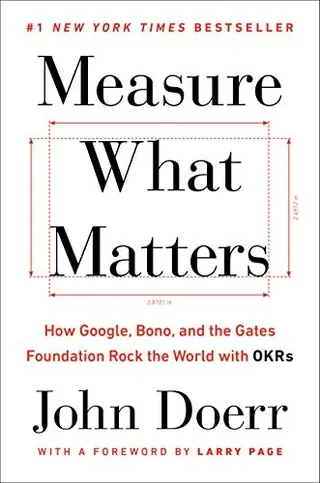
Measure What Matters (opens audible.co.uk, external site)
Shaped how I think about working towards outcomes rather than tasks, which is the shift this essay is about.
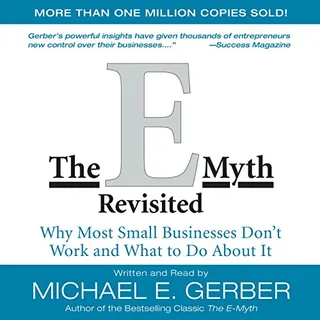
The E-Myth Revisited (opens audible.co.uk, external site)
Shaped how I think about handing work over by describing it clearly instead of doing all of it myself.
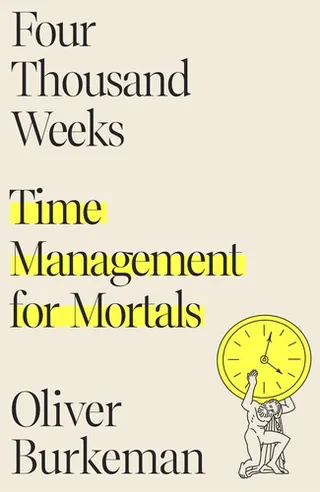
Four Thousand Weeks (opens audible.co.uk, external site)
Shaped how I think about what faster work is for, and about the limits of getting more done.