The argument in brief
- The question
- How do I know when I have stopped treating a belief as open to evidence?
- The claim
- An important belief is incomplete until I can say what would revise it. Confidence: A working hypothesis, drawn from the constitution and from experience. I have not tested it.
- The evidence
- None gathered. This is an illustrative essay and cites no sources.
- The best counter
- Some commitments are values rather than empirical claims, and for those, 'nothing' can be a fair answer.
- What would change my mind
- Evidence that stated conditions make no difference to how people revise their views, in the settings where I would use them.
The question: How do I know when I have stopped treating a belief as open to evidence?Most of us can say what we believe. Fewer of us can say what would make us stop believing it, and the gap between the two says a lot.
A belief with no way out
Once I am invested in a position, almost any evidence can be explained away. A study that disagrees used a different sample. A critic has the wrong motive. A counterexample is the exception that proves the rule. Each of those can be true, which is what makes the habit hard to see.
Claim, confidence:working hypothesis: An important belief is incomplete until I can state what would revise it. Without that, I cannot tell a conviction that has survived scrutiny from one that was never exposed to any.
Write the test before you need it
The test is easier to write early. An assumption: I am assuming I would honestly notice when a stated condition has been met. This is the weak point of the whole idea, and it is why saying the condition in public matters.Deciding in advance what would count against a position makes later honesty cheaper, because the decision was made before the pressure arrived.
The constitution puts the test plainly: if the truthful answer is “nothing”, I should recognise that I am no longer treating the position as an open empirical question.
When “nothing” is a fair answer
A competing explanation: Some commitments are values, not findings. For those, “nothing would change my mind” can be honest, as long as I call it a value.That is not always a failure. Some of what I hold is a value rather than an empirical claim, and it helps to say which is which. The trouble starts when I present a value as a finding, because then I borrow the authority of evidence I never looked at.
Publish the condition
When a piece makes an important claim, it should say what would change the view. Claim, confidence:a practical proposal: If the condition is later met, the correction belongs beside the original argument, with a date and an explanation. What would change my mind?: Evidence that stated conditions make no difference to how people revise their views, in the settings where I would use them.That is a small commitment, and one a reader can check.
If the truthful answer is “nothing”, this is no longer an open question.
Books behind this essay
Not sources for any claim here. These are books I have finished that shaped how I think about this question. Where I rely on evidence, it is cited in the text.
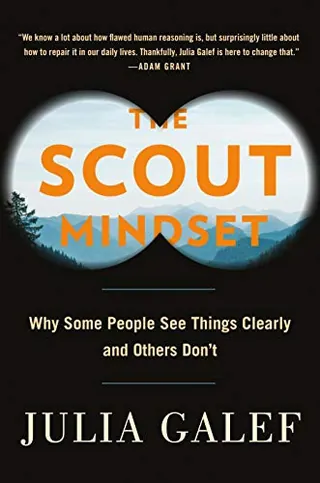
The Scout Mindset (opens audible.co.uk, external site)
Shaped how I think about holding beliefs loosely enough to update them, and about being honest with myself when evidence cuts the other way.
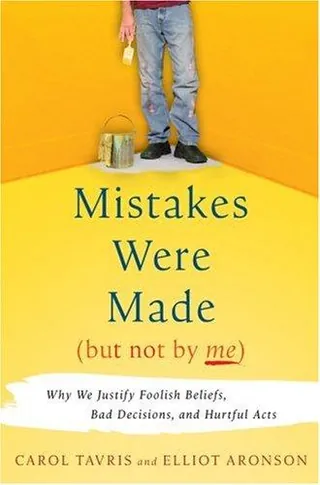
Mistakes Were Made (But Not By Me) (opens audible.co.uk, external site)
Shaped how I think about the ways we explain away evidence against something we have invested in.
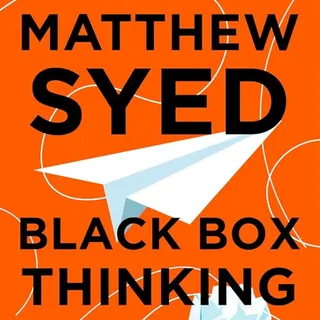
Black Box Thinking (opens audible.co.uk, external site)
Shaped how I think about treating being wrong as information, and about correcting the record in the open.